In mathematics, we often need to find the smallest value between two or more numbers that is exactly divisible by all of them. This number is called the LCM (Least Common Multiple). LCM stands for “least common multiple.” It’s an important concept in mathematics and is used in many fields, from school math to competitive exams.
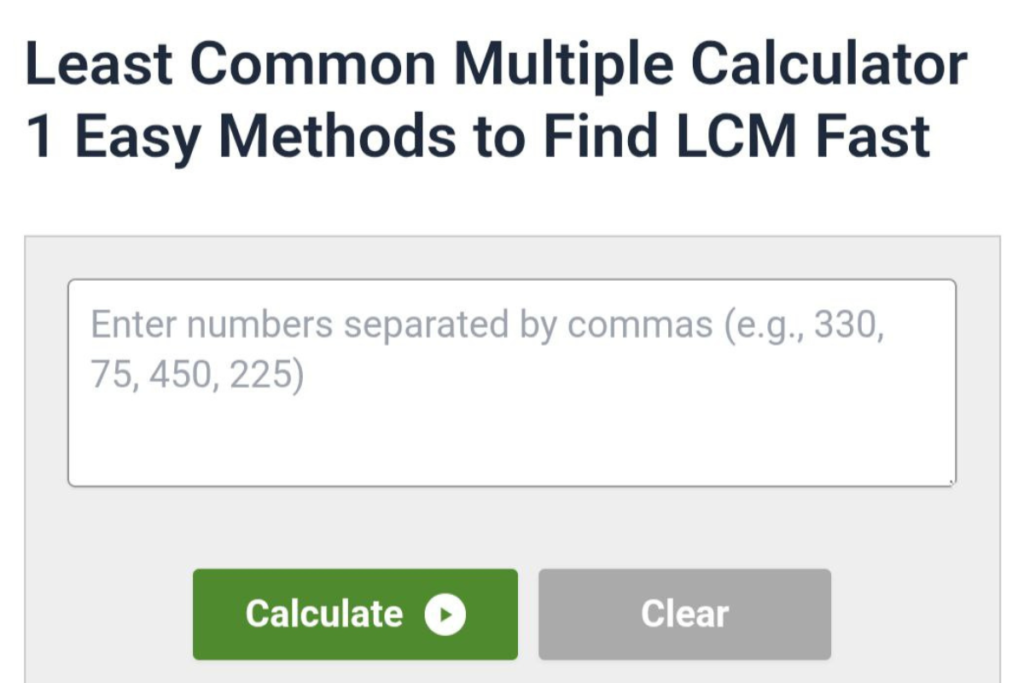
For example, if we have two numbers, 18 and 26, we need to find the smallest number that is exactly divisible by both. This number is called their LCM. For large numbers, finding the LCM by hand can be a bit cumbersome, so many people use online tools like the Least Common Multiple Calculator, which give accurate results instantly.
Step 1: Multiples Listing Method
The simplest method for finding the LCM is the Multiples Listing Method. In this method, we write down the multiples of each number and then find the smallest common multiple.
For example:
LCM(18, 26)
Multiples of 18:
18, 36, 54, 72, 90, 108, 126, 144, 162, 180, 198, 216, 234
Multiples of 26:
26, 52, 78, 104, 130, 156, 182, 208, 234
The smallest common number that appears in both lists is 234. Therefore:
LCM(18, 26) = 234
Although this method is easy to understand, when the numbers are large, many multiples have to be written down. This method can be a bit time-consuming.
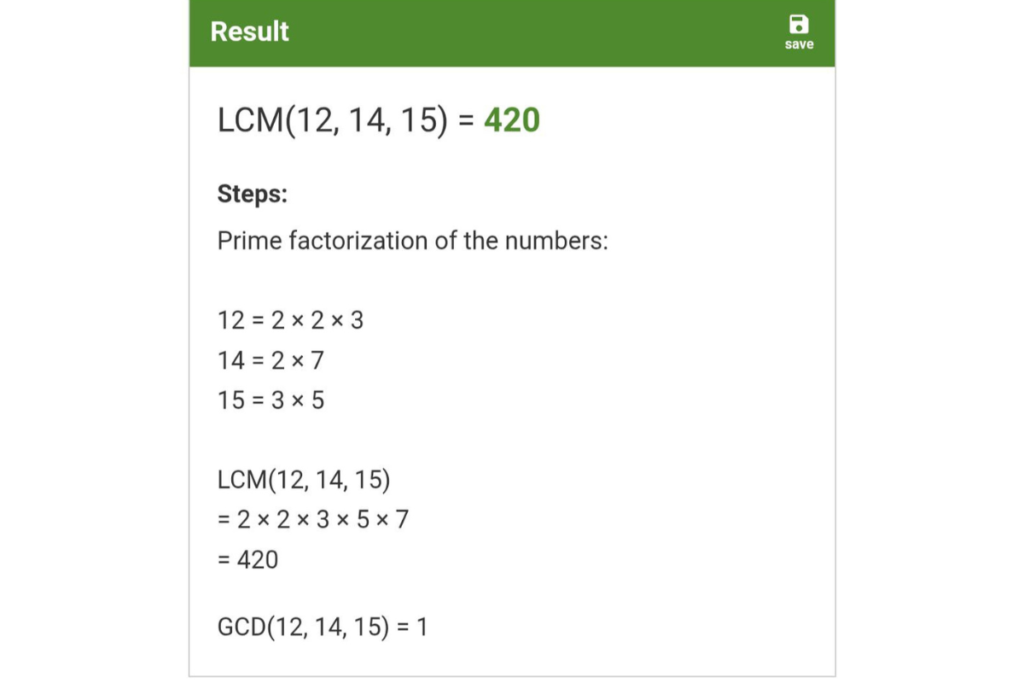
Step 2: Prime Factorization Method
Another, more systematic way to find the LCM is the Prime Factorization Method. In this, each number is broken down into the product of its prime numbers.
Example:
LCM(21, 14, 38)
21 = 3 × 7
14 = 2 × 7
38 = 2 × 19
Now the largest power of all prime numbers is taken.
3 × 7 × 2 × 19 = 798
Therefore:
LCM(21, 14, 38) = 798
This method is more efficient than the multiples method and is more commonly used in mathematics.
Step 3: GCF Method (Greatest Common Factor)
Another important method for finding the LCM is the GCF Method. GCF stands for Greatest Common Factor or Greatest Common Divisor.
In this method, the GCF of two numbers is first calculated, and then the formula below is used:
LCM(a, b) = (a × b) / GCF(a, b)
For example:
GCF(14, 38) = 2
Now:
LCM(14, 38) = (14 × 38) / 2
= 532 / 2
= 266
Now the same process is repeated with the next number.
GCF(266, 21) = 7
LCM(266, 21) = (266 × 21) / 7
= 798
Thus:
LCM(21, 14, 38) = 798
Why use an LCM calculator?
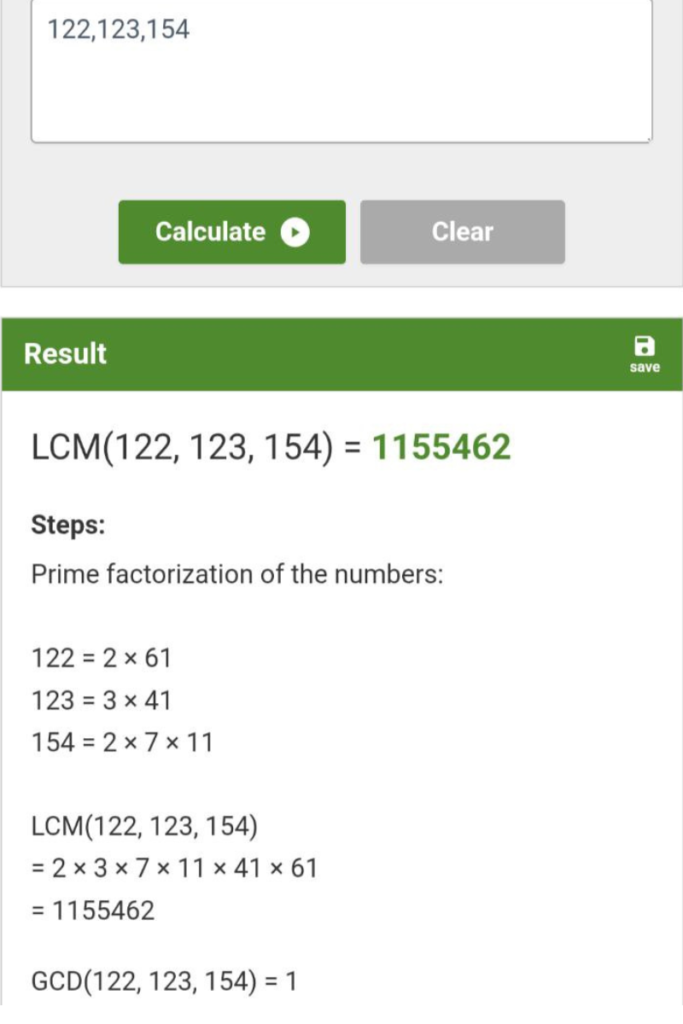
Although all these methods for finding the LCM are correct, repetitive calculations can be a bit cumbersome for large numbers. This is why the use of online tools is rapidly increasing.
With the help of a Least Common Multiple tool:
You can find the LCM instantly
Calculating large numbers becomes easier
The chance of mathematical error is reduced
Saves time
You simply enter the numbers and the calculator displays the result in a few seconds.
Conclusion
LCM is an important topic in mathematics that helps solve many mathematical problems. There are several methods available to find LCM, such as the Multiples method, prime factorization, and the GCF method.
While it’s important to learn to calculate by hand, using digital tools is more convenient and faster for large numbers. If you regularly need to find LCM, an online calculator can be very useful.